
Now it's results and not receipt checking that counts

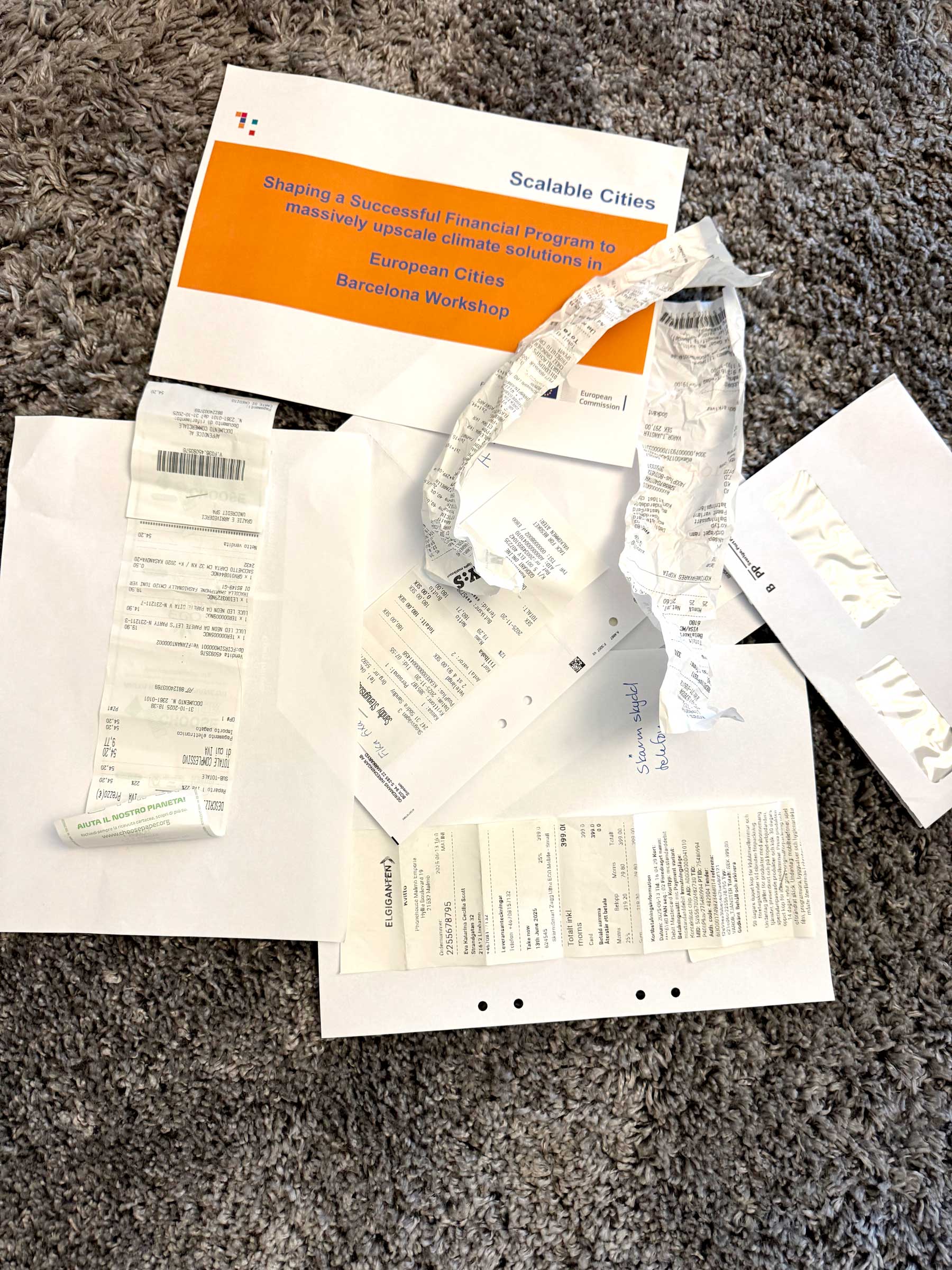
The financing of EU projects is increasingly done through the so-called Lump sum, which is a model with a fixed amount paid in parts, first as an advance, then part during the project and finally when the project or activity has been completed and approved. In other projects, payments may be based on actual costs such as materials, travel and time. Lump sum focuses entirely on the project delivering results and significantly reduces the need for detailed financial reporting.
Why did the EU start with this?
“We interpret this to mean that results have become more important than comprehensive administration and control,” says Charlotte Lorentz Hjort, project manager for the EU-funded Policy Platform ekip which is one of the first projects to be funded through Lump sum. With Lump sum, you have to focus more on your goals and the process becomes more efficient for both the financier and the beneficiary.
In a Lump sum project, success is measured by looking at the achievement of targets and milestones in the work packages rather than checking that every single euro can be accounted for.
- Whether it is an advantage or a disadvantage depends on how you see it, says Katarina Scott, who handles finances in many different projects. With a focus on deliveries, there will be less administration for partners but tougher demands on results. This places high demands on organizations to have good business models, project management and concepts that allow them to be able to deliver on time.
Managing the Lump sum in European projects requires careful planning and efficient implementation of the projects. Managers of work packages are central to controlling the work process and project results, and it is important to carry out progress reports and to be able to demonstrate that milestones have been achieved to ensure funding.
- With the wrong work package and concept design, there will be big effects on cash flow, continues Katarina Scott. The different parts and deliverables of projects depend on sustainability and it is important to choose good partners who can deliver, have a working operational model and an efficient process. A partner who does not deliver on time can set it up for all the others in the project. As a result, there will be tougher requirements for project management to be good at cooperation, coordination and that the partnership works. It should be remembered that each partner is a separate organization with its own governance. It's very difficult to command someone across organizational boundaries so collaboration and finding the driving forces becomes crucial.
For those who are aware of their processes and models, Lump sum can be an advantage.
- Lund has an experience that allows us to take a position in driving the conceptualization process with project design and make effective coordination of projects. You need to have a cross-organizational commitment, a good model for economic simulation, and set aside time and travel costs for collaborative work. I think we have all this,” says Katarina Scott.
- What is also needed is more focus on working on improvements in team building, cross-functional consortium teams, delivery in chains, formulating data delivery in contracts and formal reconciliations, and creating a model for withdrawing financing or payments along the way after delivery. An example of this is how tests and prototypes become dependent on formulation, criteria and evidence from research and users. If the final project delivery is a completed prototype, no one is approved until the prototype is completed, described, tested and delivered.
Lump-sum means an agreed predetermined budget with fixed deliveries used for certain European project types and where the sum may be different for each project. The activities and finances of the project are based on a composition of individual sub-budgets of the various participating organisations and their tasks linked to agreed deliveries that can be shared by several partners in the partnership. The projects and control bodies of the European Commission may continue to request full financial statements in detail if this is deemed necessary, even if the focus is now on delivery.