
Capturing snapshots of an innovation ecosystem
Lund Innovation Ecosystem Portfolio Tracking (LIEPT) is a joint initiative by Future by Lund and Lund University, a model designed to track and analyze the development of multi-stakeholder portfolios over time. The results are generated through data collection from numerous actors, providing a foundation for productive dialogue in complex contexts. Tracking changes within a portfolio across organizational boundaries can be compared to how individual companies report their performance in annual reports. The LIEPT model provides a snapshot that can be compared with new analyses in subsequent years.
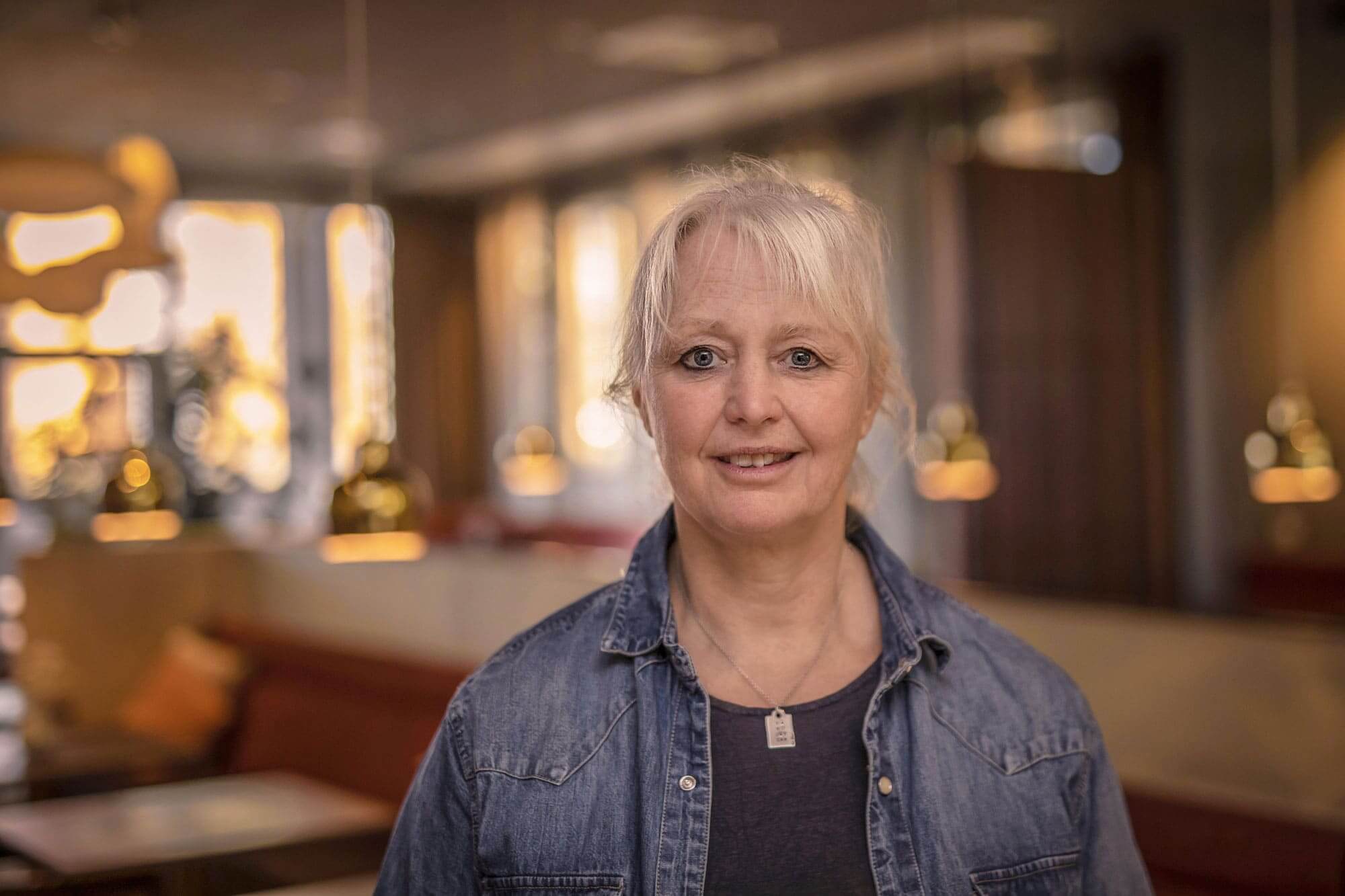
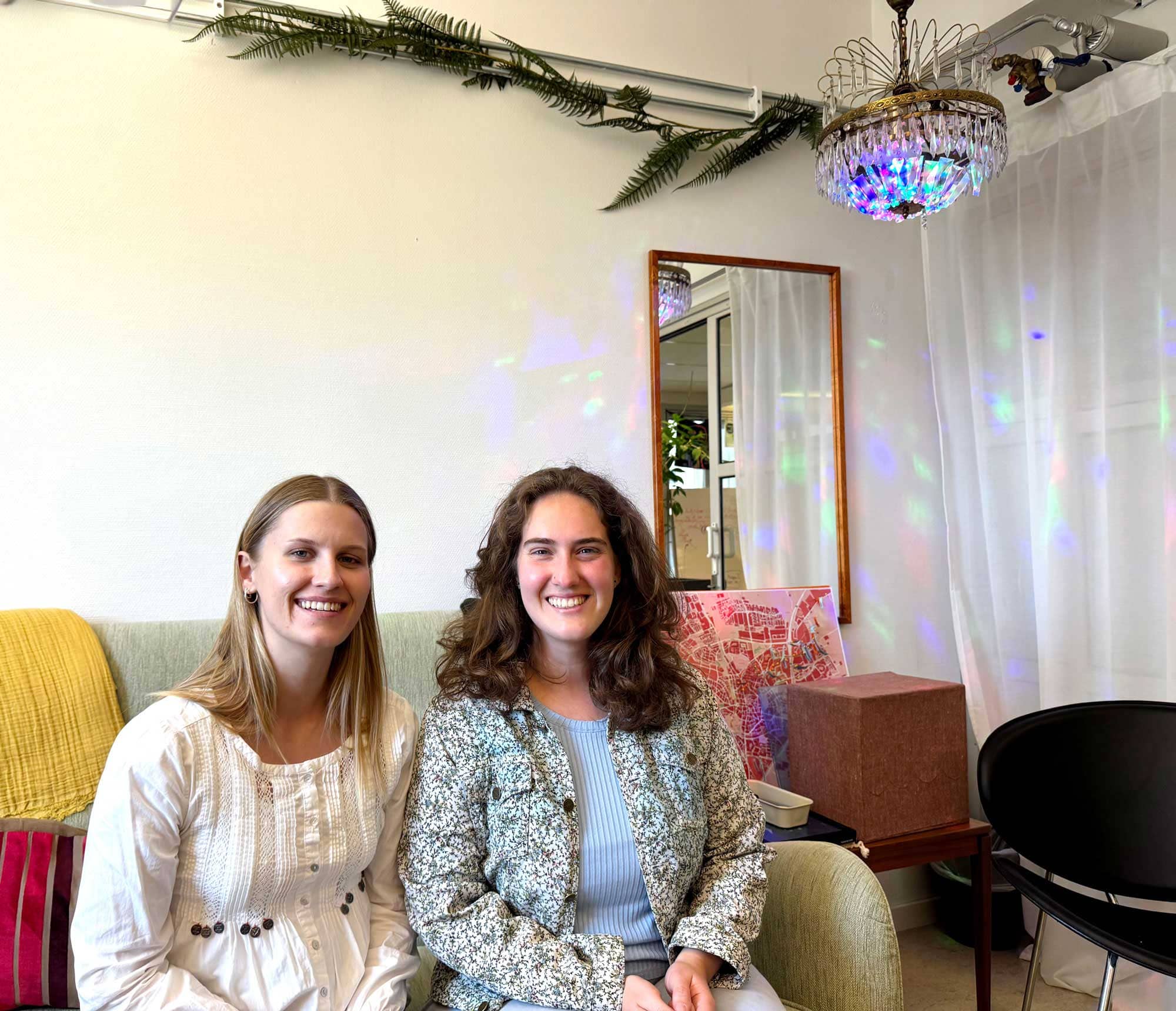
Since the autumn of 2025, Clara Marins and Frideborg Hjorth have been collecting data to map the development of portfolios within the Future by Lund collaboration. Throughout the year, both have been pursuing a master’s degree in economics with a focus on economic development through the program Global Development, Population and Economic Change.
To analyze and visualize the portfolios, they have conducted interviews to create a description of the network surrounding a portfolio, established a timeline, identified what we call "critical incidents" (key and decisive events), and developed a manual for future data collection to ensure consistency for longitudinal comparisons.
For Clara Marins, the primary focus has been an inventory of the ecosystem, mapping all of Future by Lund’s partners and their respective contributions.
- It’s about identifying the type of actor, their areas of expertise, and the resources they possess. I looked at their innovation profile, the innovation sectors they operate in, the type of partnership, and which portfolio they belong to. We also classified building blocks, looked at keywords, and examined financial mechanisms such as investments, grants, self-funding, and other non-financial resources.
The inventory provides information about what exists within the ecosystem, but it can also highlight potential gaps, trends, and more.
Frideborg Hjorth has analyzed the partners' narratives to uncover the stories behind the data—such as why they are a partner in the portfolio—and fills in the gaps. Additionally, she creates a timeline of how the portfolio evolves over time, identifying decisive events or decisions, known as "critical incidents."
- I have captured qualitative data from the stories behind the data points that Clara uses in her analysis. To find these stories, we have, among other things, interviewed Future by Lund staff. We have then attempted to standardize this into a process, says Frideborg Hjorth.
Frideborg Hjorth has developed a method for mapping a timeline based on these narratives. Part of the qualitative analysis also involves identifying the decisive events and decisions, known as "critical incidents."
The results are presented, for example, through diagrams based on the Vinnväxt layer model. The model illustrates how the ecosystem grows, but also makes it possible to draw conclusions about funding mechanisms or innovation efforts. Analyses can also be conducted to see what emerges from different innovation portfolios. The results are not just about products or services, but also methods, business models, increased knowledge, and educational programs.
- Now that there is a wealth of data, we can experiment with it and extract various insights, says Frideborg Hjorth. For example, you can filter by small or large companies, or whether the work is international or not.
The work is being carried out across many of Future by Lund’s portfolios—such as Kalaudioscope, Fashion & Textile Transformation, Biosolutions, all digitalization portfolios, Climate Neutral City, and Future by Lund’s involvement in the Storkriket Biosphere Reserve.
The work has also resulted in a comprehensive manual to ensure that material is collected in a consistent and comparable manner.
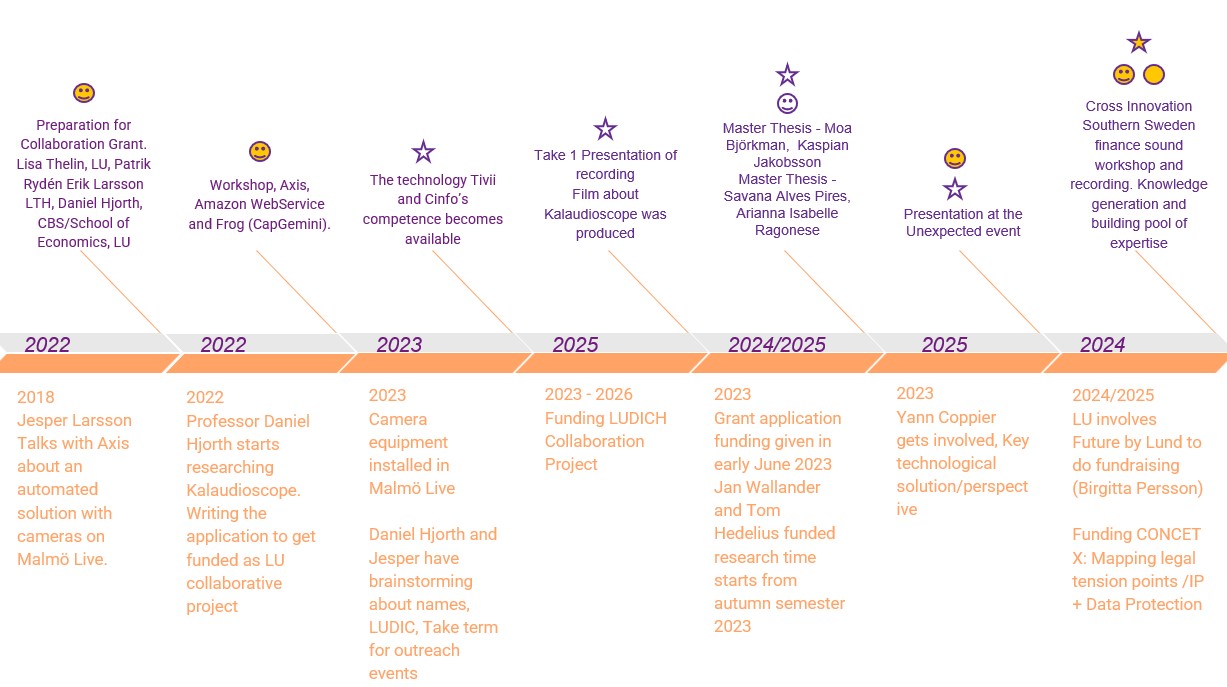
Caption: Timeline and critical incidents for the Kalaudioscope portfolio. Key to symbols: The smiling figure indicates new participants, the star represents critical incidents, and the dot represents funding. Orange denotes non-critical events.