Future by Lund's work on proposals for innovation policy to the EU
ekip is a policy platform established on behalf of the European Commission to create recommendations for policies for innovation in the Cultural and Creative Industries (CCI). Participating organisations from a large number of EU countries are involved. Lund University is leading the project and Future by Lund has an active part — but what is Future by Lund's role in a large European collaboration?
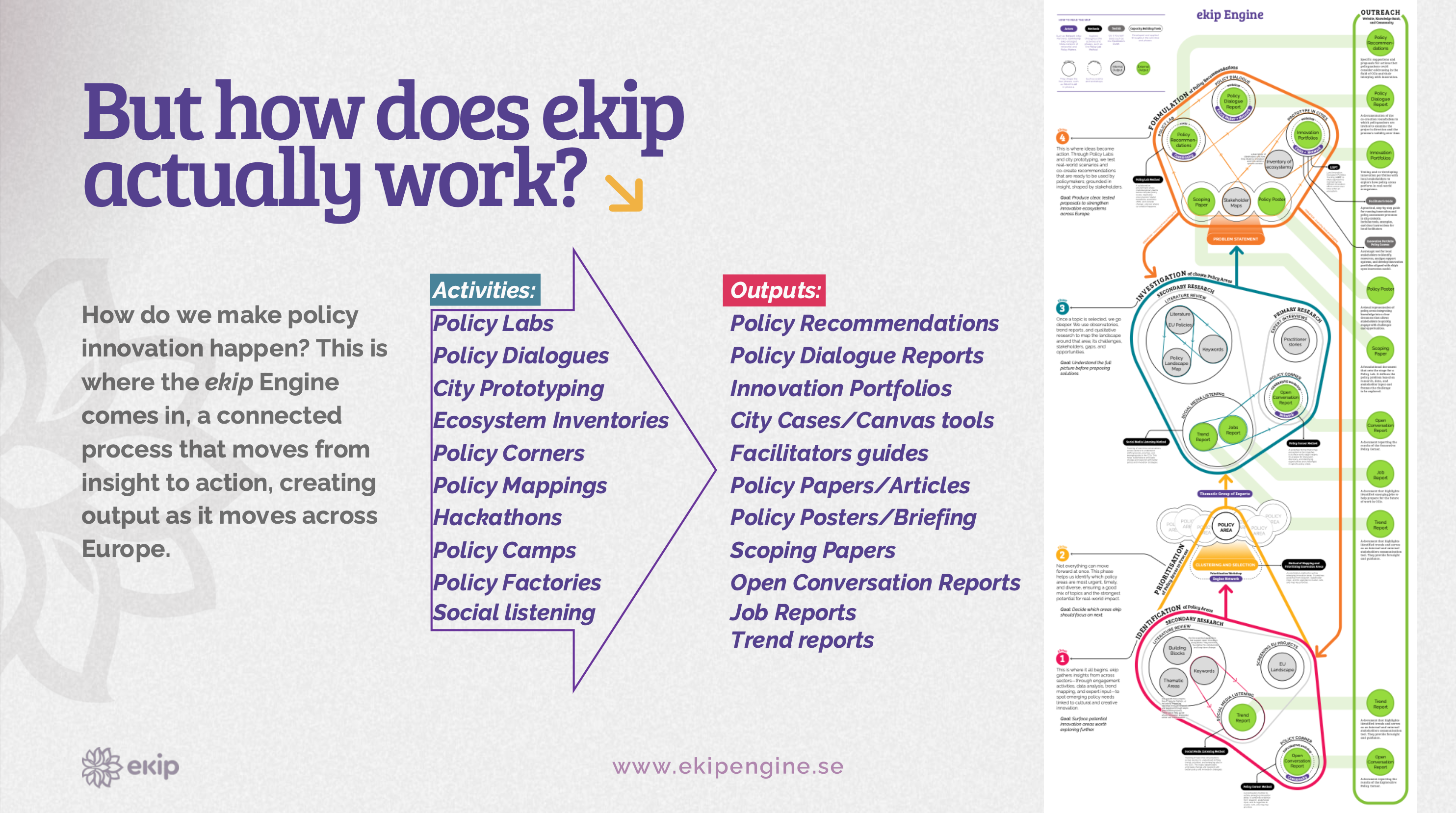
- Future by Lund has several functions, says Charlotte Lorentz Hjorth, Head Project Manager for Ekip at Lund University Collaboration and also CEO at Future by Lund. To begin with, Future by Lund had a very active role in developing the concept for the policy platform ekip, based on models, theories and tools developed partly in daily work and partly together with researchers at Lund University. Through this we created the model and process for what later became the “ekip Engine” . (Read more about Future by Lund models)
The ekip Engine is based on an inclusive innovation process and not, as is often the case in these contexts, an expert-driven policy model. The ekip Engine consists of a series of activities that take place more or less in sequences where partners participate and contribute to the formulation of policy recommendations. The policy process also includes “testing” the policy area in concrete contexts, in order to see from a real and specific environment what is needed in the form of an innovation policy that supports the desired development of an innovation area or thematic portfolio and links it with other activities for effective organization.
- What is important about ekip Engine and makes it different from ordinary policy models is the extensive and inclusive work done around an innovation area, continues Katarina Scott, project developer at Future by Lund. Through this, networks are formed and information is collected. We also create scenarios with links to decision-making both within a thematic area and with intersecting areas, which are really the most important for innovation work itself. As a result, policy work becomes innovation-driven.
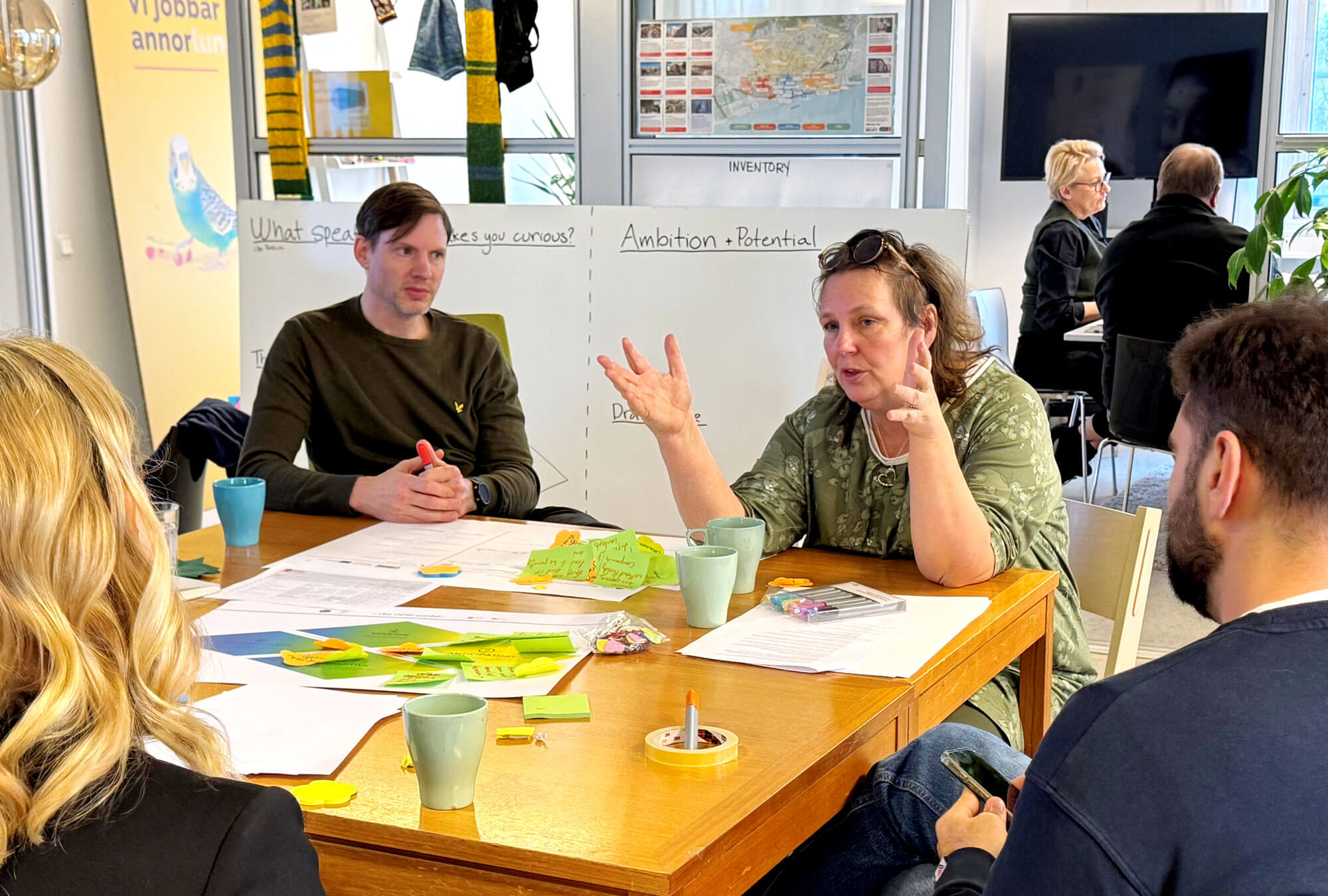
Together with Lund University, Future by Lund leads what is called “City prototyping”, which deals precisely with the local innovation context. Before policy recommendations are launched, many partners work in the various activities that make up the “ekip Engine” policy process to investigate different themes. This can be the development of new knowledge, for example by inviting external experts who are important for the early investigation work. City prototyping involves cities, universities and researchers, but also other policy actors, not least from KKN and the wider business community.
- In City prototyping, we include those who do the innovation work, and also recruit actors from intersecting areas, continues Katarina Scott. Within ekip, Future by Lund and Slovak Cike in Kosice, City of Rotterdam, City of Bratislava, Finnish Humak and St-Etienne are assigned to lead the prototype work. However, the methodology has begun to spread and now even more cities from all over Europe are participating.
An example where Future by Lund has worked in Lund is through three different City prototyping labs. It has been focus on AI in KKN, and then Fashion & design combined with DPP as well as Digitalization of cultural heritage. Arrangements have been made to understand impacts and opportunities for innovation and the creative sectors. The work has been linked to, for example, the innovation portfolios “Archaeology, cultural heritage, and immersive tech” and “Fashion & Textile transformation”.
- We ask a concrete question to the local context about what a new policy would mean and bring, for example, within our portfolio in the field of archaeology in Lund, says Katarina Scott. We see how it affects the local innovation ecosystem, but also whether there is any “hole” due to new policies. An EU policy does not “land” in the same way in different local contexts, but there is a job of adaptation and complementarity to be done.
ekip also uses Future by Lunds canvas model (developed within ekip) where one examines an area of innovation and builds on it from a specific context (ecosystem). A method for prototyping in local ecosystems has also been created that one can follow.
Based on this, ekip can produce reports that are then sent as policy recommendations to the EU to show what is interesting at local level. At the same time, something has also been started that can bring something completely new to the local context. The methodology is based on transformation through innovation as well as the activation and inclusion of ecosystems to manage it. It is about setting up common starting points, finding players and resources for portfolios and seeing how to build good structures to support innovation.
- The point of making a prototype is also the insights that those who participate receive. What do they see that needs to be done on the basis of the joint work? What do our common building blocks for innovation look like? When can you participate as an actor? How will future policies affect us and help us? This is a craft and it is such work that makes innovation portfolios take off. In our work with teamwork, we can see that in all places where a serious prototype has been made, things have happened. These can be new or more consolidated ideas, initiatives, consortia and projects. For us in ekip, it is important to use all the work done around policies as a kind of starting engine or starting point for innovation work, concludes Katarina Scott.
The project phase in ekip will run until November 2026 but then the intention is for ekip as a policy platform to be established in order to move into its next phase.