
Cultivated meat - no longer science fiction
For many, perhaps, the idea of cultured meat seems remote and challenges our daily eating habits. But as biotechnology advances, new products could become a reality in the coming decades -- more than a hundred companies worldwide are already making strides in developing foods from animal cells. These are foods that allow us to satiate more people with fewer resources.
Cultivated meat has great potential to contribute to a more sustainable food system, and while it sounds remote, the technology builds on already established biology and food science. By growing muscle and fat cells outside the animal body, meat can be produced without traditional animal husbandry, using techniques similar to how cheese or other fermented foods are made. Cultivated meat can become a supplement that in the long run can reduce dependence on conventional meat production. Given that about fifty percent of today's traditional meat consumption is of various kinds of minced meat, suitable products can start with cultured minced meat in both pure form and hybrids with conventional meat. The production of cultured meat relies mainly on satellite cells from muscles, which can be propagated in nutrient-rich culture media.
Researcher Jette Feveile Young from Aarhus University said that studies show that farmed meat can provide major environmental benefits over traditional meat, through greatly reduced greenhouse gas emissions, lower land and water use, and fewer air pollution. At the same time, energy demand is a major challenge — the production of farmed meat requires more energy than conventional meat. Nevertheless, the climate footprint has the potential to be lower when factoring in emissions from tractors and livestock as well as some feed production. Access to renewable energy is also a crucial component.
Regulationally, several breakthroughs have occurred in recent years, with approvals in Singapore and the US, among others, while Europe is moving more slowly. Development is influenced not only by scientific advances, but also by political and cultural factors.
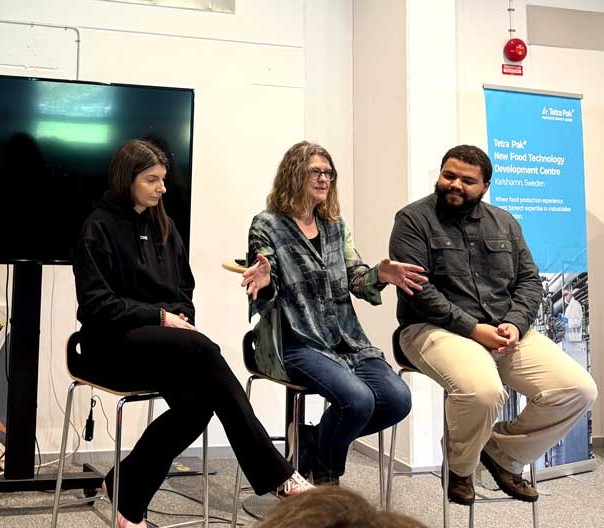
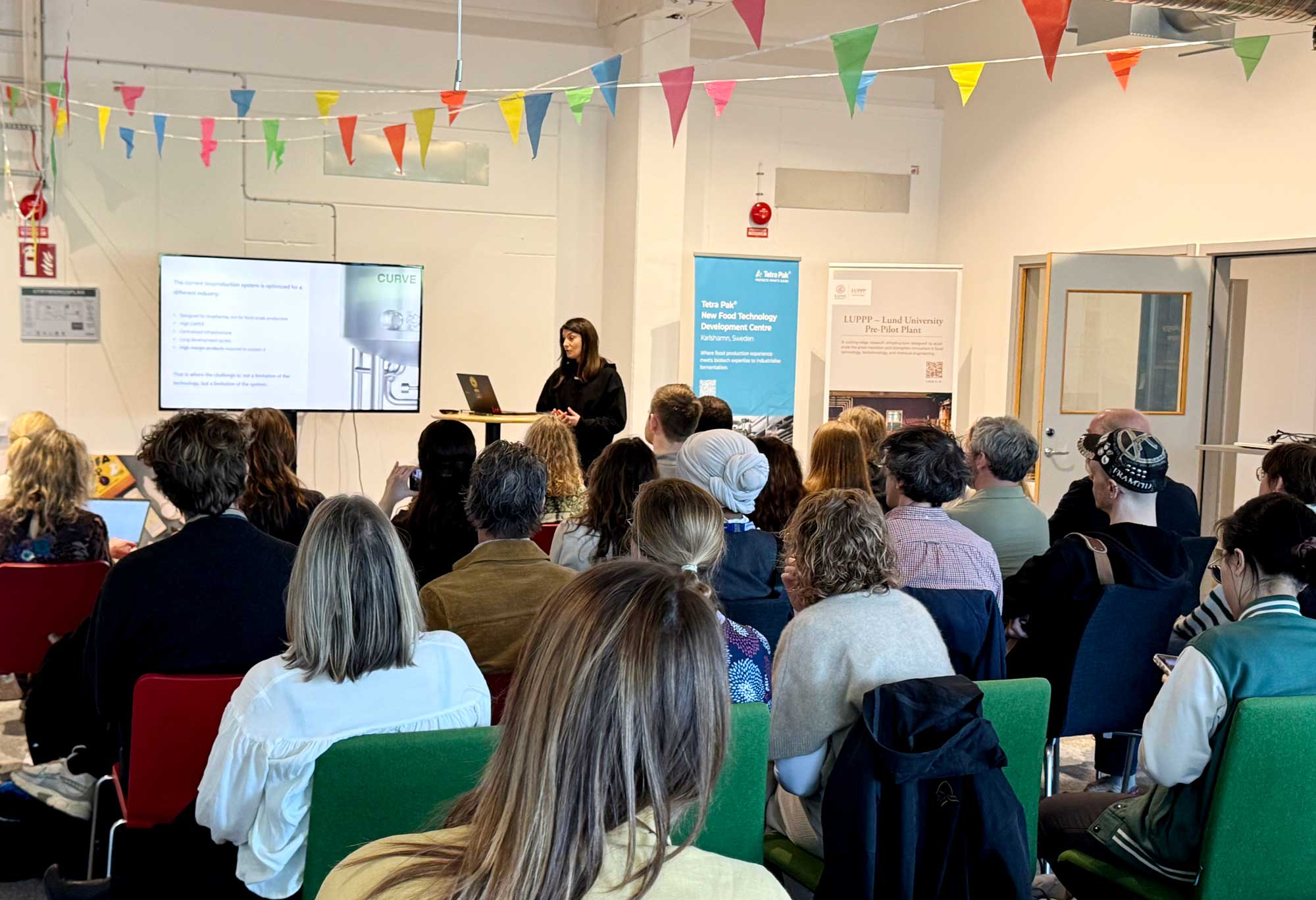
IN Biotech Heights premises in Lund are available Curve with technologies that can help create robust fermentation production systems. Letícia Heuko Pscheidt highlighted that the methodology for growing meat has made great advances in biology and cell culture, but that infrastructure is a bottleneck for large-scale production. One problem is that the technologies and systems used today are many times adapted not for food production, but for pharmaceutical production. Food production poses completely different requirements because, compared to pharmaceuticals, there are extremely high volumes, low margins and high demands on cost-effectiveness. There is a need for a production system adapted to food, developing new types of bioreactors and production platforms.
Letícia Heuko Pscheidt highlighted that since many players in cultured meat are startups, access to turnkey, easily integrated systems is crucial. Standardized and flexible solutions allow companies to move faster from lab to pilot and on to commercial production.
Ismaël Bawah from The Good Food Institute gave a global overview of the area based on the Industry Report for 2026, where you can read, among other things, about the cultivation of meat and seafood. The report provides a broad overview of an area with challenges, but at the same time maturing rapidly.
By the end of 2025, the report identified 142 companies operating mainly in farmed meat and seafood, slightly fewer than in the previous year. At the same time, wider industrial engagement is increasing: a further 138 companies are active through investment, partnerships, research or infrastructure. The US, Israel, the UK and Singapore emerge as particularly important hubs. Manufacturing capacity is singled out as a decisive factor for commercialization. In 2025, several new pilot and production facilities were established, including in the United States and China. At the same time, the investment climate has become more restrained.
Foods should not only be satiating — they should be good too!
When it comes to developing cultured protein as an alternative to meat and seafood, it is very much about getting a good process, finding the right technology and creating the right rules to be able to produce fermented, healthy foods. But it's also about a lot of other things, like getting consumers to accept the new foods and finding products that taste really good. The discussions during the meeting at Biotech Heights showed that there is much more to ponder.
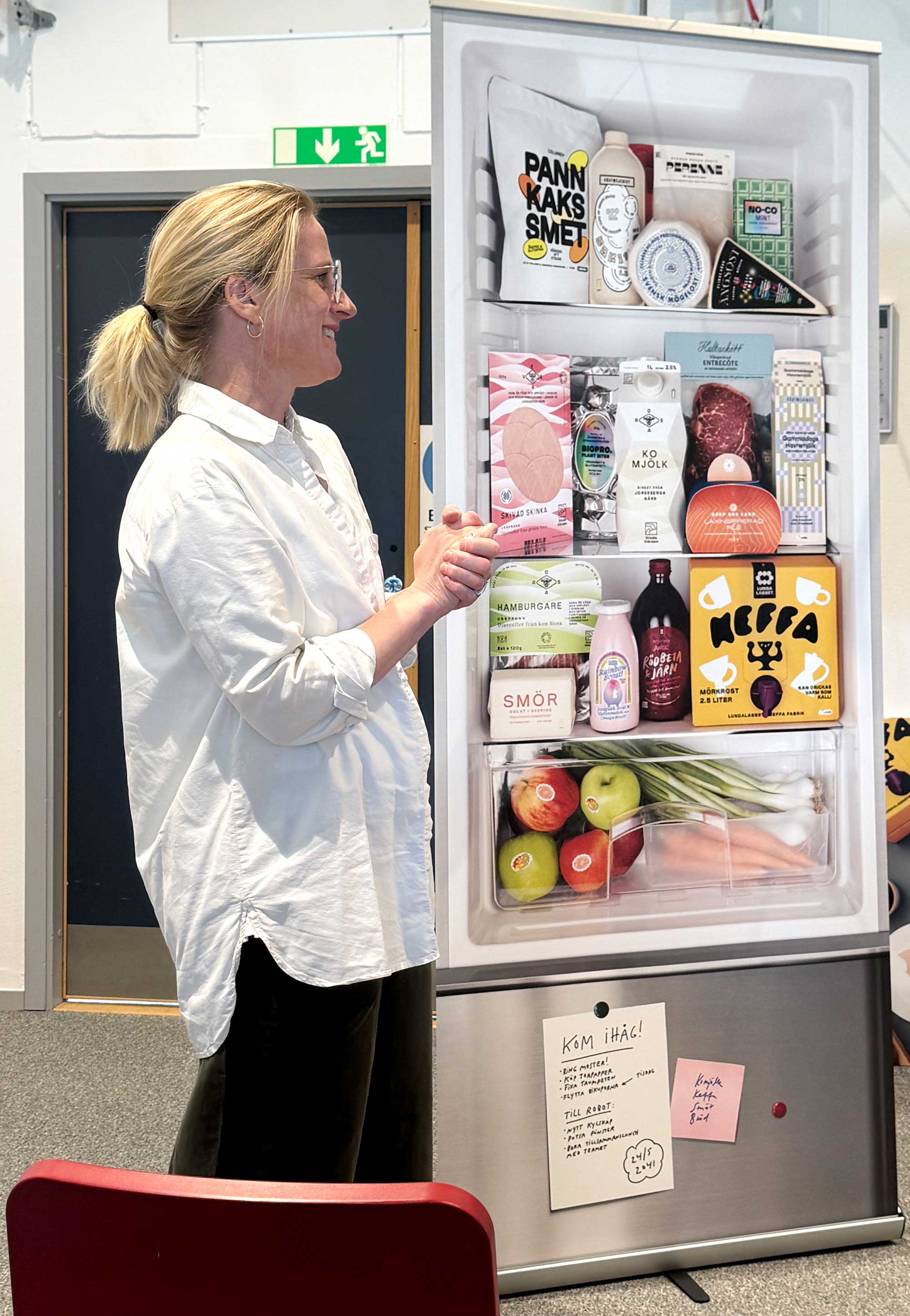
Some thoughts picked up from the discussions:
*Who will be the consumers of the new products? A wise answer was that it may not be those who are vegetarians in the first place, but it is perhaps rather for those who eat conventional meat and want to reduce the amount of meat. Thus, new products could include both conventional meat and farmed meat in a mixture. This can lead to many different types of products, some for people who want to reduce the amount of conventional meat and some for those who do not want conventional meat at all.
* Much of the production of the foods we already eat is also about science and can be seen as synthetic, if one wishes. We are used to that. The production of cultured meat is nothing different from this, and it may be good not to portray the production of the new fermented foods as something very synthetic. There are already products with cultured meat in other countries, and when people actually eat farmed meat, their acceptance increases because they can see that it is a normal product. Things can be scary in theory, but when you have a real product in front of you at the grocery store, it becomes more normal.
* It is already the case that only a small portion of the population consumes the amount of fiber that they should. In order to get the population to eat healthier, the introduction of the new cultured meat products could provide a chance to create products that are healthier in many ways. In products that are completely or almost free from elements of traditional meat production, you can add extra fiber, iron, B12 and other good elements from the plant kingdom.
* An important question is how to speed up the European implementation of a regulatory framework for farmed meat, so that Europe can be more on par with the countries that have already started using these new foods. Places like Biotech Heights can be a way of showing legislators how much opportunity there is in the field, both economic and environmental, but also for the geopolitical situation in terms of autonomy and supply chains.
* Can you make cultured meat even more attractive than conventional meat, just like when you went from cow's milk to oat milk, where some prefer the taste of oat milk. Can we make farmed meat taste better than conventional meat?
* The role of farmers must not be forgotten. What can be done to involve them already in this early phase of a new market? How to get biocircular waste streams from both plant and animal based sources, so that farmers get more out of the products, both more economically and with a smaller carbon footprint. It could be an opportunity for them to change their production and provide more of the ingredients for the final product.