
Reduced waste and new products with a wool trading app
Could sheep farmers and those looking to buy wool trade directly with each other, cutting out the middlemen? And could customers express their preferences for a product at an early stage? These questions are being explored in the project "Bridge Builders for Personal Small-Scale Design, from Farm to Consumer." The goal is to create an app that acts as an intermediary between the agricultural sector and consumers. While the project uses wool as its primary example, the intention is for this pilot to pave the way for other small-scale operations as well.
Finanisär


The project application describes how difficult it currently is for raw material producers to reach end customers in an accessible way. There are potentially many consumers who would like to use these raw materials, but doing so requires a process that makes trade user-friendly for both consumers and producers.
A project is now being launched to build this bridge, with designer Erica Laurell as project manager and initiator.
"The idea is that by learning from old methods and crafts and combining them with new and innovative technology, we can enable solutions for how small-scale local primary production can meet the end customer's specific needs and contribute to circular consumption," she explains.
The project application describes the current situation.
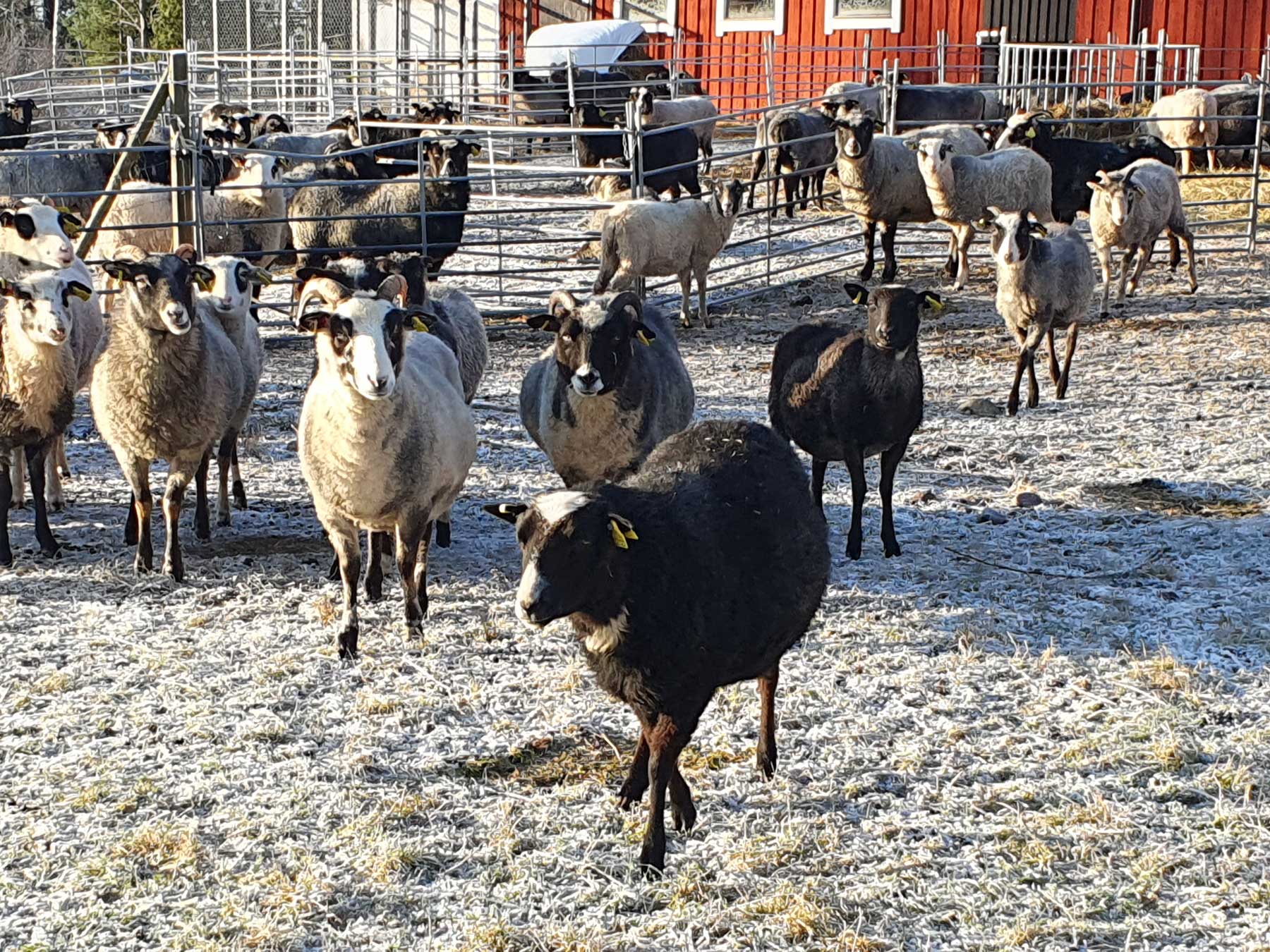
"Wool from Swedish sheep has so far been used much less than in countries like Norway and England. Instead, we import large quantities from places like Australia and New Zealand. Swedish wool is considered less user-friendly than foreign wool and is also thought to lack the properties required for many processing methods and end products, which reduces its competitiveness."
"I have conducted several research projects on Swedish sheep breeds, and I find this project very interesting because it can both provide information that can be used in further research and contribute to increasing the use of wool from Swedish sheep breeds," says Anna M. Johansson at SLU.
The Digital Product Passport (DPP) is the backbone of the project: it ensures transparency and traceability from the origin of the wool to the finished product in line with the EU's upcoming Ecodesign Regulation, and enables data-driven quality assurance and new circular business models.
A group is now being formed to develop a prototype for an app that acts as an intermediary between the agricultural sector and the customer. Through this innovation, the animal owner/farmer can reach the consumer directly while simultaneously receiving information about what the consumer wants and how the raw material can be adapted to those preferences. This means that everything produced could be put to use, including smaller quantities and items that would otherwise have become waste. Technology and digitalization provide direct contact with the end customer, removing unnecessary middlemen. At the same time, there is the opportunity to develop methods that process the raw material to meet the consumer's needs, thereby making the product more personalized.
"We see that this innovation can be part of increasing the competitiveness of Swedish local production and, in the long run, Swedish preparedness. We have selected a small segment of primary production that we believe is a good foundation for building a method, which can then be expanded to other raw materials," says Erica Laurell.
The project has brought together many different areas of expertise, including how to adapt the properties of the wool to meet the end customer's needs. Feed, breeding, care, and shearing can all have an impact, and the properties of the wool will be measured in the laboratory at Wagenfelder Wollspinnerei. The app will allow the consumer to digitally view the product before purchasing the raw material and will provide the customer with a custom knitting pattern that can be hand-knitted to the customer's body measurements. The app could later be further developed for other agricultural and livestock raw materials.
"It feels good to be involved in a project that makes use of Swedish wool and to be able to contribute my knowledge of dyeing, as well as to pass on my experience after 40 years in the field," says master dyer Claes Hedström.
The project is expected to lead to reduced greenhouse gas emissions, less waste, and the opportunity to purchase products from animals that live in good conditions.
"The project is important so that I, my fellow farmers, Swedish citizens, and society in general can gain access to and benefit from the resources that are so close to home," concludes Mats Pettersson, sheep farmer at Starrhammars farm.
The innovation group's work is part of the strategic plan for the EU's Common Agricultural Policy 2023-2027. The goal is to create favorable conditions for addressing the challenges facing the food sector and rural areas, such as climate change, threats to biodiversity, and business profitability and competitiveness.
Project Bridge Builder for personalized small-scale design, from farm to consumer
Participants: Designer Erica Laurell, sheep farmer Mats Pettersson, Rodens Ullbruk, master dyer Claes Hedström, game designer Anton Ekberg, Anna M. Johansson (researcher in production genetics and sheep breeding at SLU), and the FBL innovation platform in collaboration with Lund University.
Project duration: Sep 2025–Jan 31, 2026
Funders: Swedish Board of Agriculture, EU


