
Daniel Hellström hopes that innovation will become a clear priority for the university
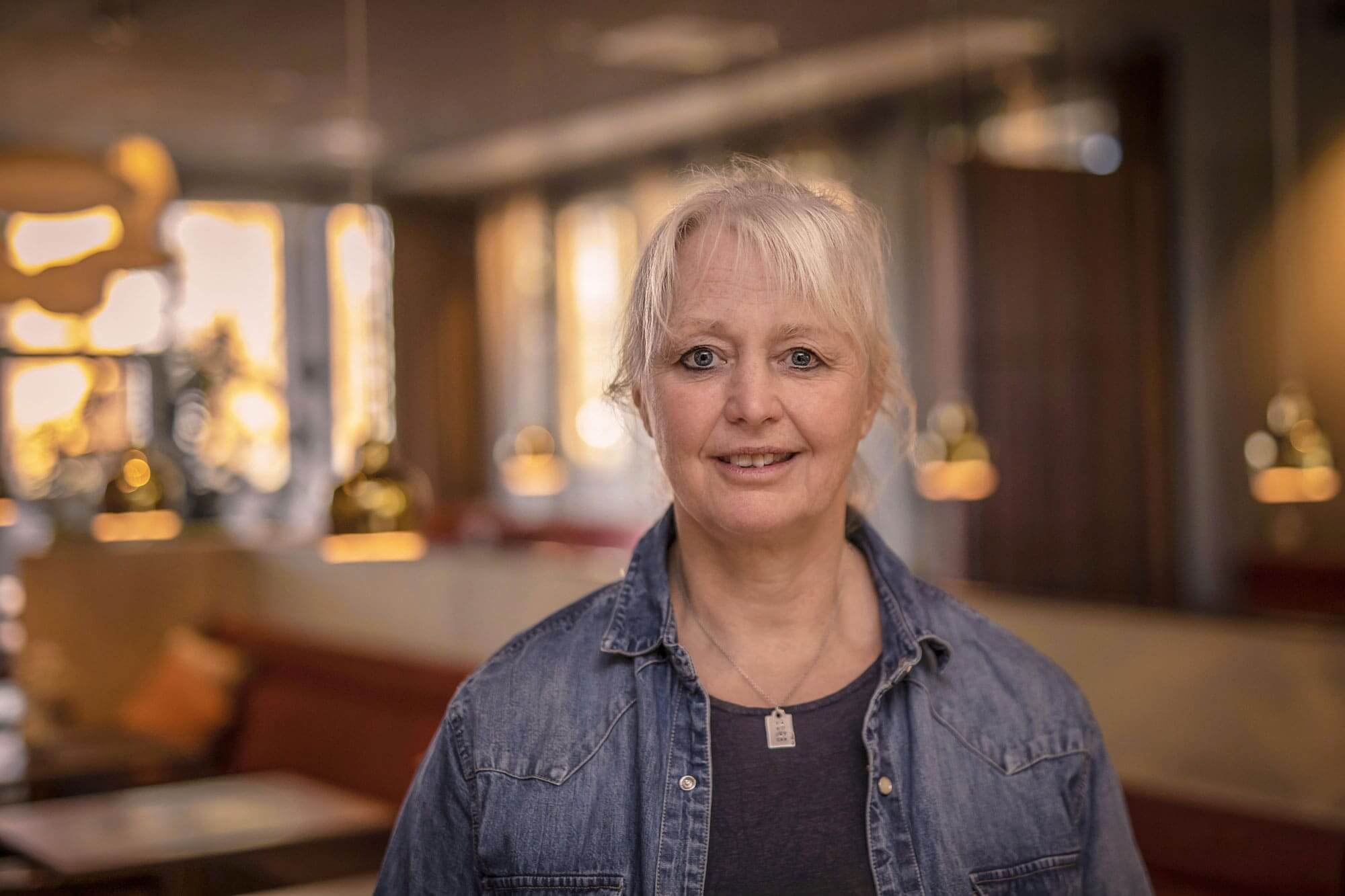
Daniel is a professor of packaging logistics at Lund University and studies how packaging affects transport, retail, and consumer experiences. Here is how he describes his research (taken from Lund University’s publication on the professorial inauguration):
“In my research, I investigate how packaging and logistics systems are shaped by and interact with technology, people, and organisations. A change that seems beneficial in one part of the system can have unexpected consequences in another. For example, less packaging material is not necessarily better if it increases the risk of damage and reduces transport efficiency. What particularly interests me is highlighting the goal conflicts that are hidden behind seemingly simple decisions.” Read more.
Daniel Hellström and his colleagues investigate e-commerce deliveries and returns, as well as how digitalisation and circular flows are changing packaging and working methods. In the department’s work with students, companies are always present – whether through study visits, guest lectures, or when the companies’ real-world challenges are brought into focus and students create prototypes as part of a project. Together with Future by Lund, this has primarily concerned areas such as logistics, e-commerce, and transport.
What do you hope we can achieve together in these areas?
- Right now, I hope we can build a strong innovation portfolio. I have seen a great need for this for a long time, as a great deal is happening within logistics and transport in this region. We want to connect more cities to Lund University and find ways to start collaborating in a triple helix format.
What do you think we have achieved through our collaboration?
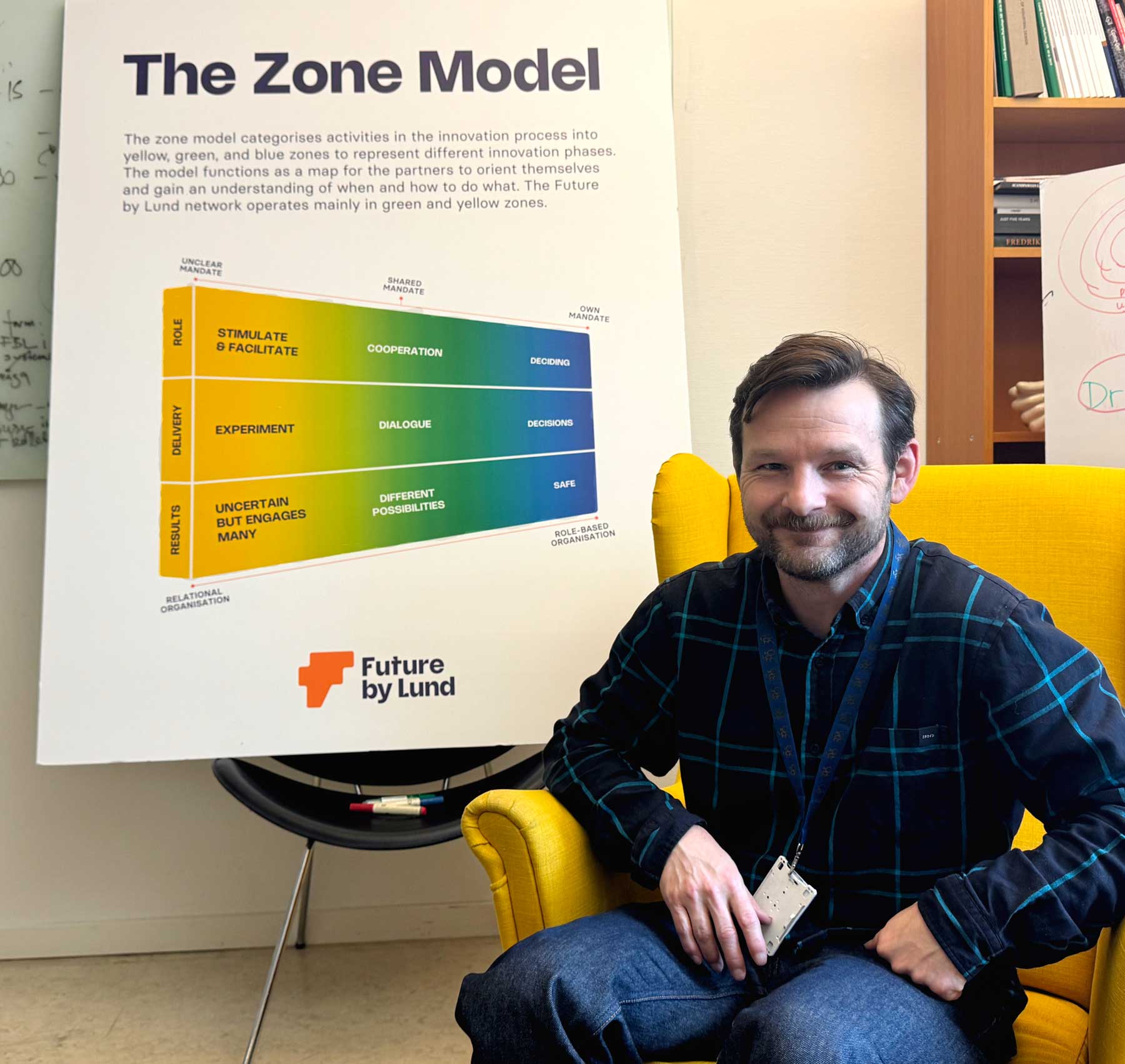
- I have learned a great deal, for example about building innovation portfolios, where the systematic approach and understanding of the process are central. Much of it is about people and how we can work. Future by Lund’s zone model has helped me gain a language and a mental model that allows me to do the right thing more effectively and explain it to the students.
Future by Lund works extensively with the Digital Product Passport (DPP). Will this be included in your courses?
- Right now, there are a great many technologies competing for a teacher’s attention. AI overshadows much, and in a world of AI, the Digital Product Passports will be increasingly important. Therefore, it will be included in courses and projects.
What is required for the industry to take a greater interest in DPP?
- The industry does not act on potential; companies must test and experiment together with others. What is required is for the industry to start bringing actors together to conduct tests. Larger players carry out their own tests, but smaller players may be interested in starting to trial-label garments and see how to integrate labels, pricing, barcodes, and more.
Future by Lund uses a portfolio-based approach. What advantages do you see in this?
- By focusing on work within a portfolio, the actors together create momentum to move an area forward. You can clearly see how things build on and relate to one another. In addition to the interaction within a portfolio, it is also possible to explore synergies with other portfolios, which is why it is important that Future by Lund works with several portfolios simultaneously.
Looking at the retail sector over the next few years – what trends do you see?
- AI is driving development, and we will consume more via e-commerce, partly because it will become easier to find products. With the help of AI, it will also become easier to run e-commerce. Furthermore, networks for consumer-to-consumer shipping will become more integrated, so that, for example, Vinted will open up for trade between more countries. Another trend concerns home delivery of groceries. In other countries, it is much larger than it is in Sweden, and globally, the curve is only pointing upwards.
Collaboration is the third mission of universities – but Daniel Hellström would have liked to see that mission further developed:
- I hope that universities decide that innovation can be a new third mission instead of stopping at collaboration. That would be a significant development given how quickly the world is changing!