
Become an IPA Transformation Specialist!
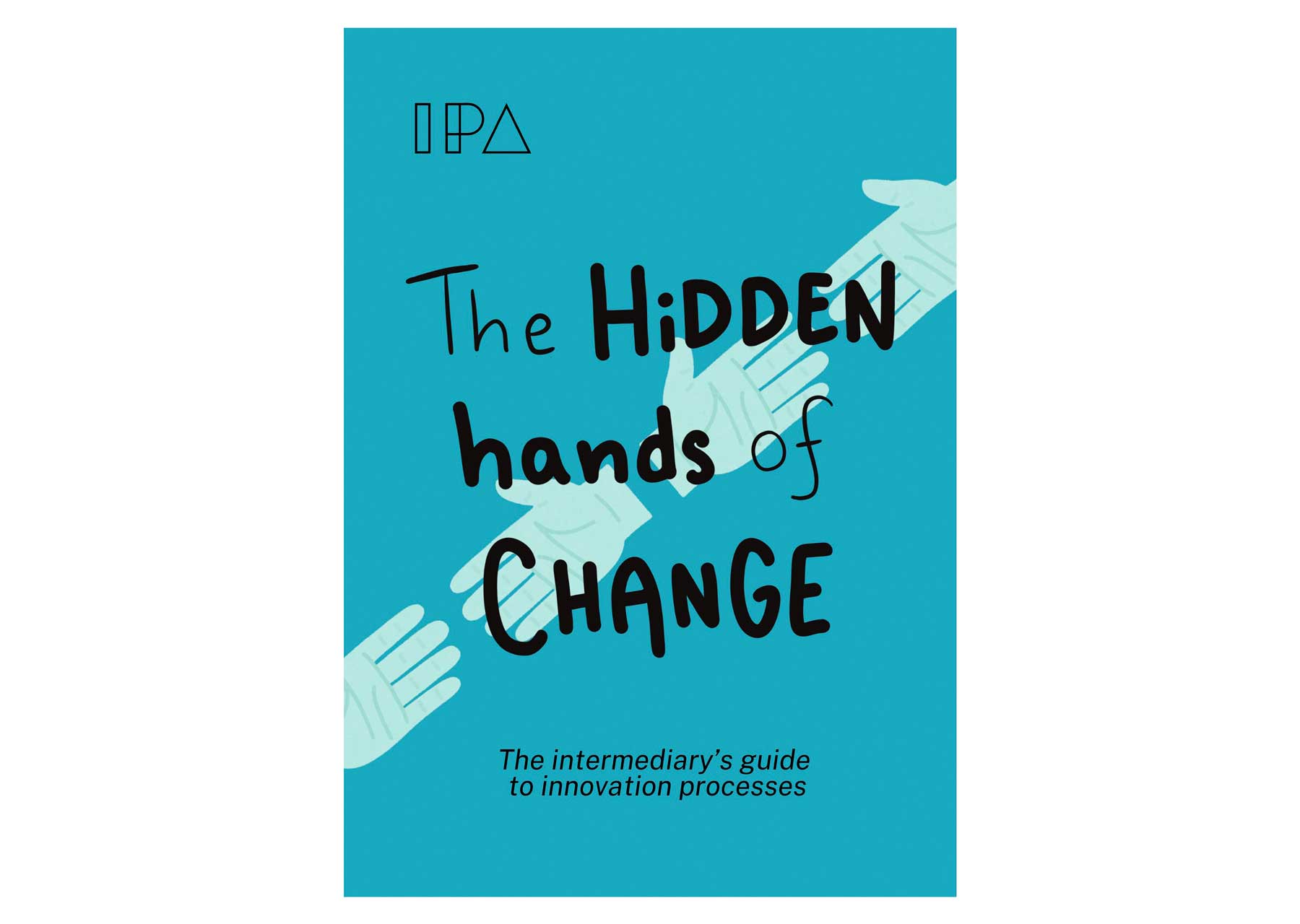
The Project IPA (Innovation Portfolio Approach) connects innovation with existential perspectives. This is done because innovations are created and used by people, for example when working with sustainability, and this requires integrating innovation work with ethical and existential perspectives. Many innovations arise in borderlands between different disciplines. In order for it to work, an intermediary is often needed, which makes different activities work together. In the IPA project, the parties have examined how intermediaries can work with large and complex challenges, the practical work to solve them and with different driving forces. Their experiences are summarized in the “Hidden Hands of Change” guide on the role of intermediaries. Behind this are the three partners Future by Lund, the cultural organisation PLAI in Romanian Timișoara and Master's Programme for Urban Managers at Amsterdam University of Applied Sciences (hVA) in the Netherlands.
- Transformation is not just about external factors such as technology and economics, but there are many internal factors for how to get it done - such as bringing people into work, explains Katarina Scott, project developer at Future by Lund. The IPA Guide provides support and inspiration for how to work and for the innovations created to be good for us as people, nature, animals and the planet.
For whom did you write the guide?
- We see two main target groups. First of all, the target audience is those who work with transformation today in an often self-imposed intermediate role. They often lack concepts and models to describe their work which means that their work is often invisible and unsupported. The second target group is those who see the potential in working with intermediaries, often change leaders in city administration or the like.
The IPA guide contains inspiration for how to rig the work and thoughts on what conditions might need to be in place. The guide is not an academic product but written to provide new approaches in a more tangible way.
- We contribute methods and models and at the same time structure for the intermediaries to lean on, continues Birgitta Persson. It is also an introduction to how it can work with innovation portfolios and gives examples of how it can be done in different places. It also shows what abilities an intermediate can benefit from.
Through the guide, you can also download a canvas that is helpful when posting your portfolio work and is based on a methodology developed by Future by Lund.
Now the IPA project is finished and the guide is ready - what are you most satisfied with in retrospect?
- Such development work normally takes four years, but we managed it in two, says Katarina Scott. In fact, I am very pleased that we have been able to take it to such a level of concretization and that we have also had time to test work with it. We've taken something that we know works to another level so that it works even better. I am very pleased that we have actually tried so that the way of working holds in different organizational and cultural contexts.
- I am very pleased with the response we have received from the Swedish Energy Agency and the various researchers connected with this and who have evaluated the project. It was ambitious to integrate existential perspectives into a sustainable innovation process. In two years, you do not have time to be completely ready, but you have time to take some decisive steps and create a foundation for development,” concludes Birgitta Persson.
Here you can find the IPA Guide “Hidden Hands of Change”