
The innovative power of a good story
Future by Lund develops how many people can innovate together and brings together approximately 45 members and a large number of partners and actors who participate in various ways in building innovation portfolios. We are a platform that drives innovation and development in complex areas by creating interaction between many actors in ecosystems – in other words, everything we do is about collaboration and shared outcomes.
We work through innovation portfolios, where together we tackle challenges that none of the actors can solve alone, using open innovation. For us, it is part of the innovative work to tell about what we do. Many factors are unknown and often the activities carried out are not visible to anyone but those involved. Making stories about what was accomplished helps us create an interest so that we can bring in more actors when needed during the work. Our stories are intended to create context, show those involved the value of the participants' efforts, articulate opportunities and can even help drive the development of innovations and innovation portfolios forward.
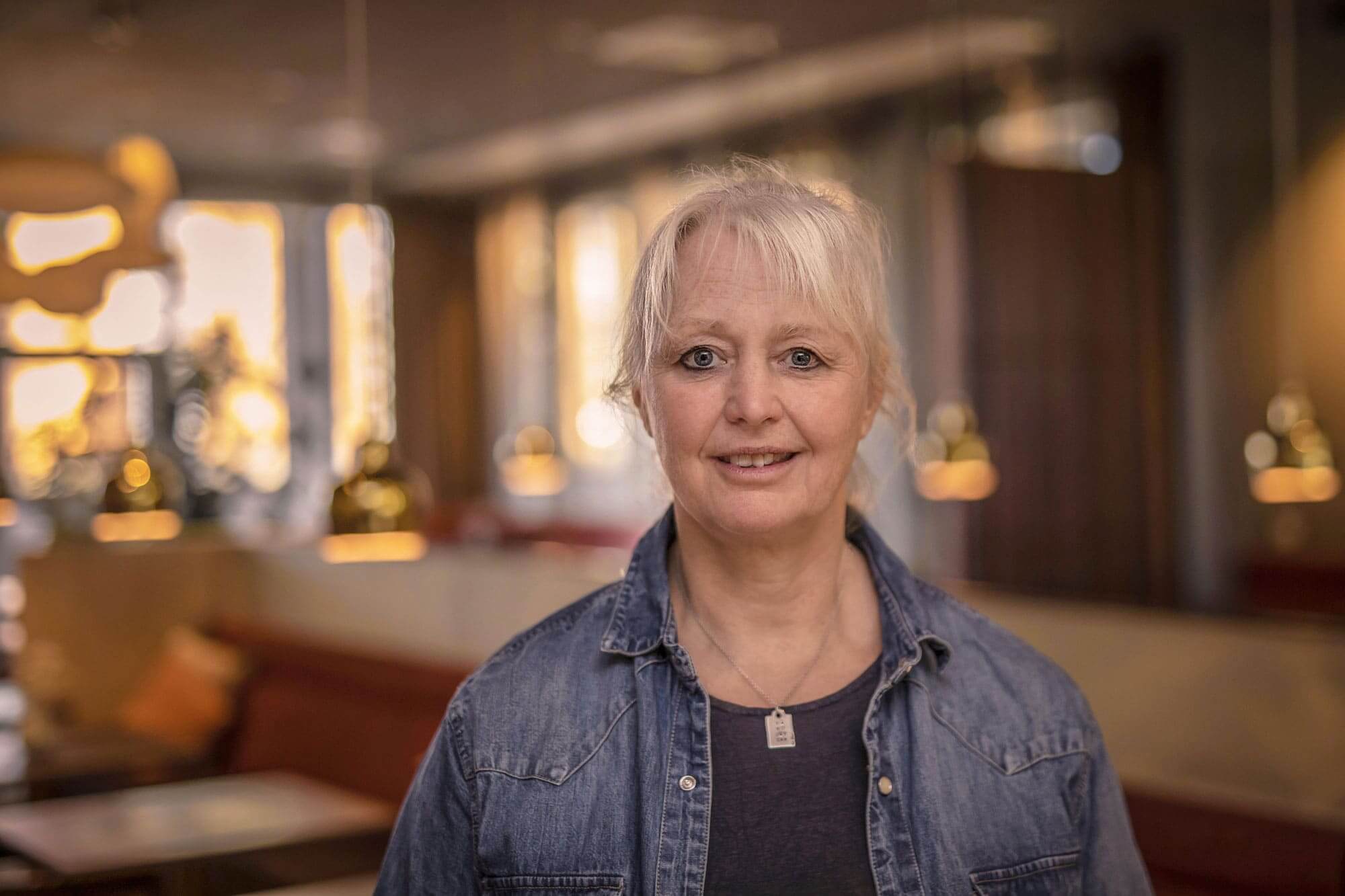
– If you work with innovation in what we at Future by Lund call the yellow zone (areas for open innovation and ecosystems where no actor has its own mandate) it is important to be concrete and to articulate and capture what it is we see happening and what is the potential, says Katarina Scott, project developer at Future by Lund. Together we achieve new things at the same time that communication is visible and strengthens relationships and new knowledge. Therefore, communication and stories are a cornerstone of Future by Lund. We work in a “multistakeholder governance” environment where who is responsible for the challenges we will face together needs to emerge and no one actor can decide over the other. Then it is especially important to make visible, articulate and communicate to create context.
Future by Lund operates in five different thematic areas (Digital Cities & Cities, Creatives & Changemakers, Future Living & Spaces, Ideas for Society and Moving things & People), currently has sixteen portfolios and often takes on challenges and opportunities by creating combinations of different specializations. It is not uncommon for us to find that there are natural links between what one would traditionally place in different fields – such as Tech and cultural and creative industries, IoT and urban planning, circular models and digitization, to take just a few examples. This makes our business a challenge to communicate in a way that is always understandable and clear, while providing a picture of the complex possibilities and advanced competencies involved.
In the spring of 2026, an external evaluation of our business was done, and the evaluators pointed to precisely this complexity and difficulty in creating something clear and systematic and to communicate Future by Lund as a whole. In the future, we will highlight more clearly what is the role of Future by Lund in the contexts we describe. In addition, we have often highlighted our members and partners – now there will be slightly more articles with the portfolios in the main role to explain the context more clearly. It will be important to demonstrate the value of our facilitator role by presenting cold facts, the good examples and the hard evidence in really clear narratives. Of course, this will also include our members and partners, because it is the results of joint efforts that are the best evidence.
Over the years, Future by Lund has communicated through about a thousand articles, project texts or stories about the joint work. We have done this by making parts of our portfolios visible and combining many people's wishes about how the communication should look. Often there are solutions on a case-by-case basis, because organizations often want it in slightly different ways. There may be special formulations that you want to include, topics that may be important to describe in certain ways or that it should be the right time in relation to your own company's communication. Some may even be hesitant to participate in a joint communication and would rather make their own. Regardless of the wishes, it is usually possible to solve - but it is a question that should not be forgotten. As we write about the emerging work on our innovation portfolios and the work that our partners are doing here, we have placed great emphasis on giving the participants and, if they so wish, their communications departments, the opportunity to ensure that the content of our text also aligns with their message. Respect is important and together we ensure that the text is objective and accurate.
Of course, it is up to each organization to decide how to communicate and there are many things to consider. Here are some of them:
* What information can and can be shared?
* What does the organization want to approve? Quote, mention or being tagged in social media? Can you imagine participating on a website, in a press release, in social media or in a newsletter?
* It's good to have a pronounced and quick contact path for approval. The easier you make the process, the more communication is likely to be. Actors who are quick to deal with are of course easier to pick up in articles.
* How will the organization itself be able to contribute to increased communication? Do you want to share what is written or produce your own content?
* How can we best describe joint and own innovation portfolio work to enhance the portfolio's potential?
10 good reasons why Future by Lund talks about innovation
1. Communication can provide an understanding of challenges in an area that is difficult to grasp and can demonstrate the potential that could exist with a common innovation portfolio. By articulating ourselves, we create understanding.
2. The story creates a certainty that in the cooperation there is a “we” consisting of people from many different organizations who have in common that they are ready to go together into unknown territory to solve challenges. Stories build and consolidate relationships and create community, commitment, understanding, trust and energy. In Future by Lund, we see that a good story can make people feel, think and act.
3. In order to succeed in innovation and work with unknown things, the story can even be decisive. By shaping a story that grabs hold, we articulate the value of an innovative service or product. Innovation requires action and activity and innovation portfolios involve chains of actors and activities. Making visible what is happening, how to do it and who is the person behind it is an essential to make what can be accomplished become real and generates energy and commitment.
4. By following Future by Lund, stakeholders will be able to discover that they have interests that coincide with those of other organisations and that there are opportunities to start fruitful collaborations and develop a portfolio together.
5. Future by Lund's texts are intentionally relatively simple and explanatory in order to inspire more people to dare to start working in areas that are not their first choice, for example by incorporating new technologies in an innovative way into the business. We want to show opportunities in unexpected and unknown areas for partners, such as new technologies for industries that are not fundamentally technical.
6. Many of the people we work with can be relatively lonely in their organization working externally with innovation. By telling what they are doing, we can help create understanding but also build credibility and mandate.
7. A “story” can be a way for Future by Lund to say thank you and give credit for the work a person or organization has done — it can be arranging a workshop on an interesting topic, offering knowledge in a webinar or contributing to a joint project. In some cases, these are small or start-up organizations that may not have their own communication in place, and what we write can provide them with support in contact with new partners.
8. The portfolios often combine several areas of knowledge and may need to capture more players than the most obvious ones. We constantly scan for suitable actors, but of course interesting combinations can also arise through actors discovering opportunities themselves.
9. Our way of telling gives us as an innovation platform an opportunity to map in retrospect the chains of events that were decisive and provides the basis for analysing the impact of different projects. In this way, communication has contributed to the development of theories about innovation work and innovation journeys.
10. Many contexts, theories, models and tools become more understandable and useful through explanatory articles. The LIEPT model, the Zone model and Innovation by production are examples of things that are perhaps best described by telling a story.