Digital inclusion in a changing world
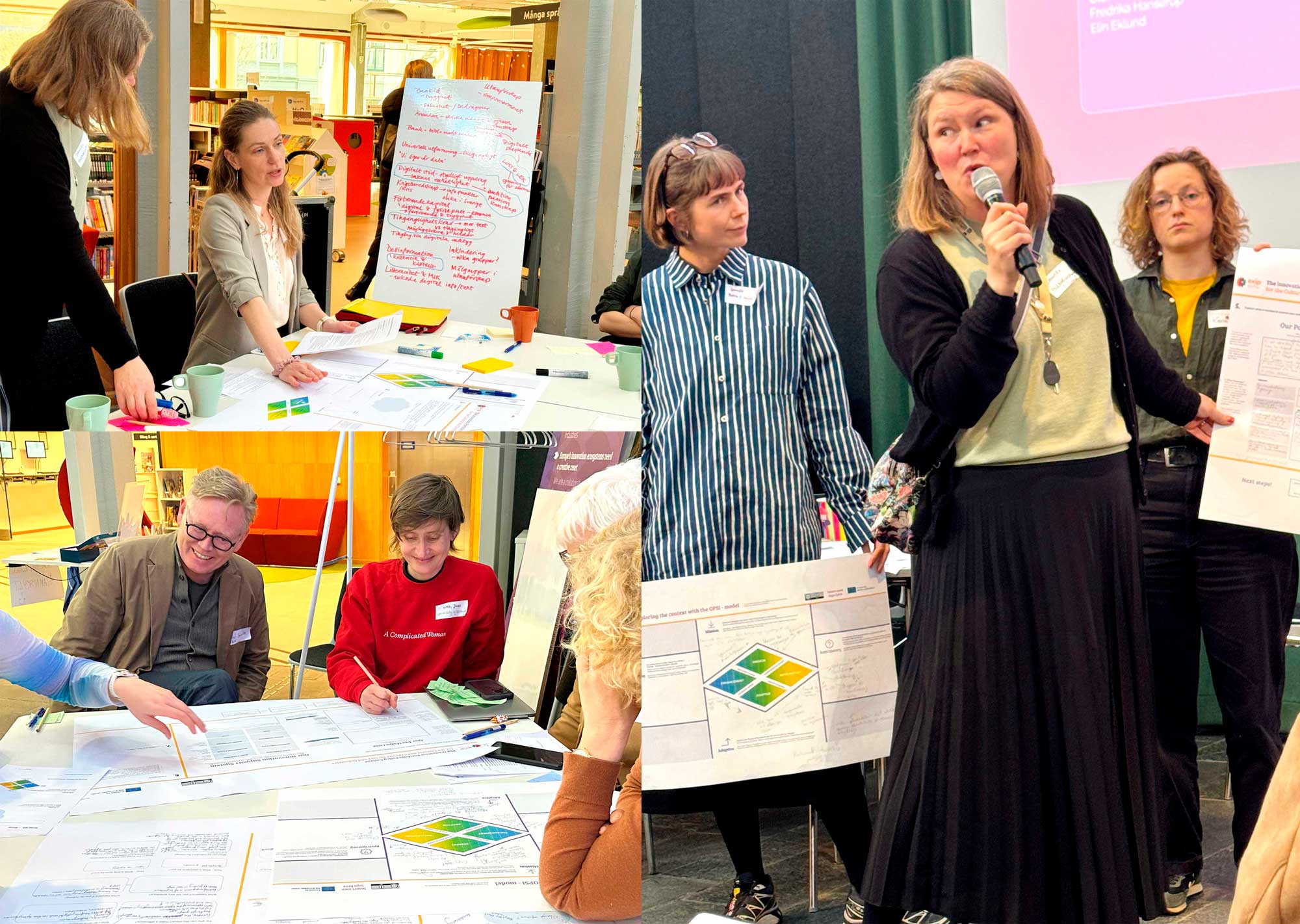
One of the public libraries' missions is to promote democratic values with a focus on access to information, literature and knowledge, as well as the formation of free opinions. In order to participate in democratic society and manage the changing information landscape, residents need not only reading skills and access to information and technology, but also the ability to relate source-critically to the digital flow. Libraries are mandated to focus in particular on the groups in society that need the most support with this. The high speed of digitalization, social media and the use of AI is pressing and many people are not able to handle digital contact with government agencies, but also the digital parts of medical visits, ticket booking, bank contact and so on. The rapid development also affects library staff — who may feel that there is a need for them to keep up to date on both the flow of news and technological developments. For example, there are questions about how to deal with the dominant social media platforms and what role libraries need to take in an era of increased disinformation, polarization and digital vulnerability. Since libraries cannot do everything themselves, it also becomes a question of how to create joint capacities and collaborations between public and private organisations.
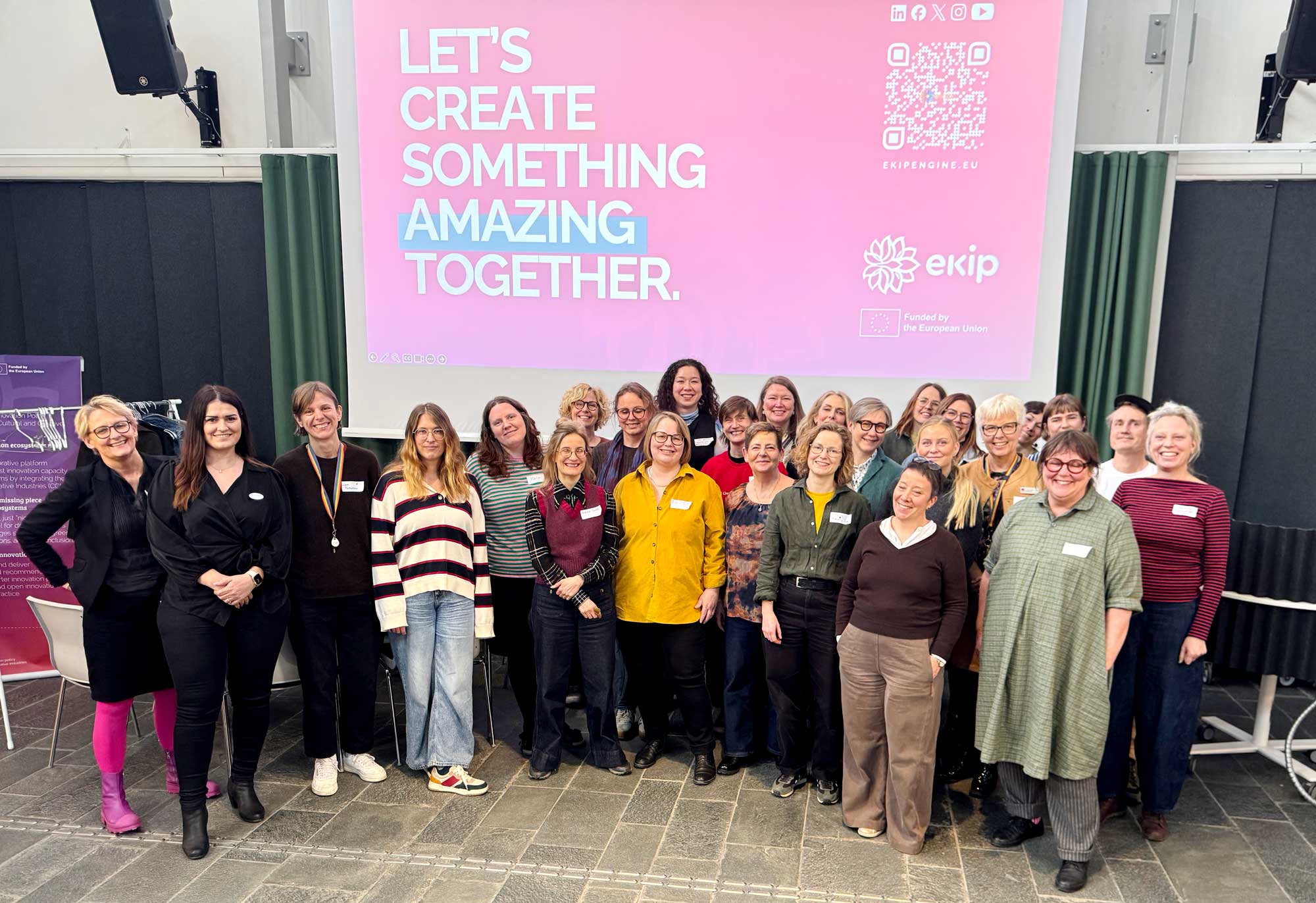
The workshop is part of a series of workshops in European cities (Rotterdam, Košice, Saint-Étienne, Bratislava, Debrecen, Tampere and others) where each city contributes an analysis of how innovation policies can support the cultural and creative sectors and industries based on different priority innovation areas. Also in Lund there have been two such so-called “City prototyping labs”. Then the focus was on AI in KKN, subsequently Fashion, craft & design combined with DPP This time, “Digital Commons (Inclusion) and Democracy” will play the main role. The workshops are part of ekip, an EU-funded platform for innovation policies for the cultural and creative industries. team led by Lund University together with Future by Lund and 16 other partners around Europe.
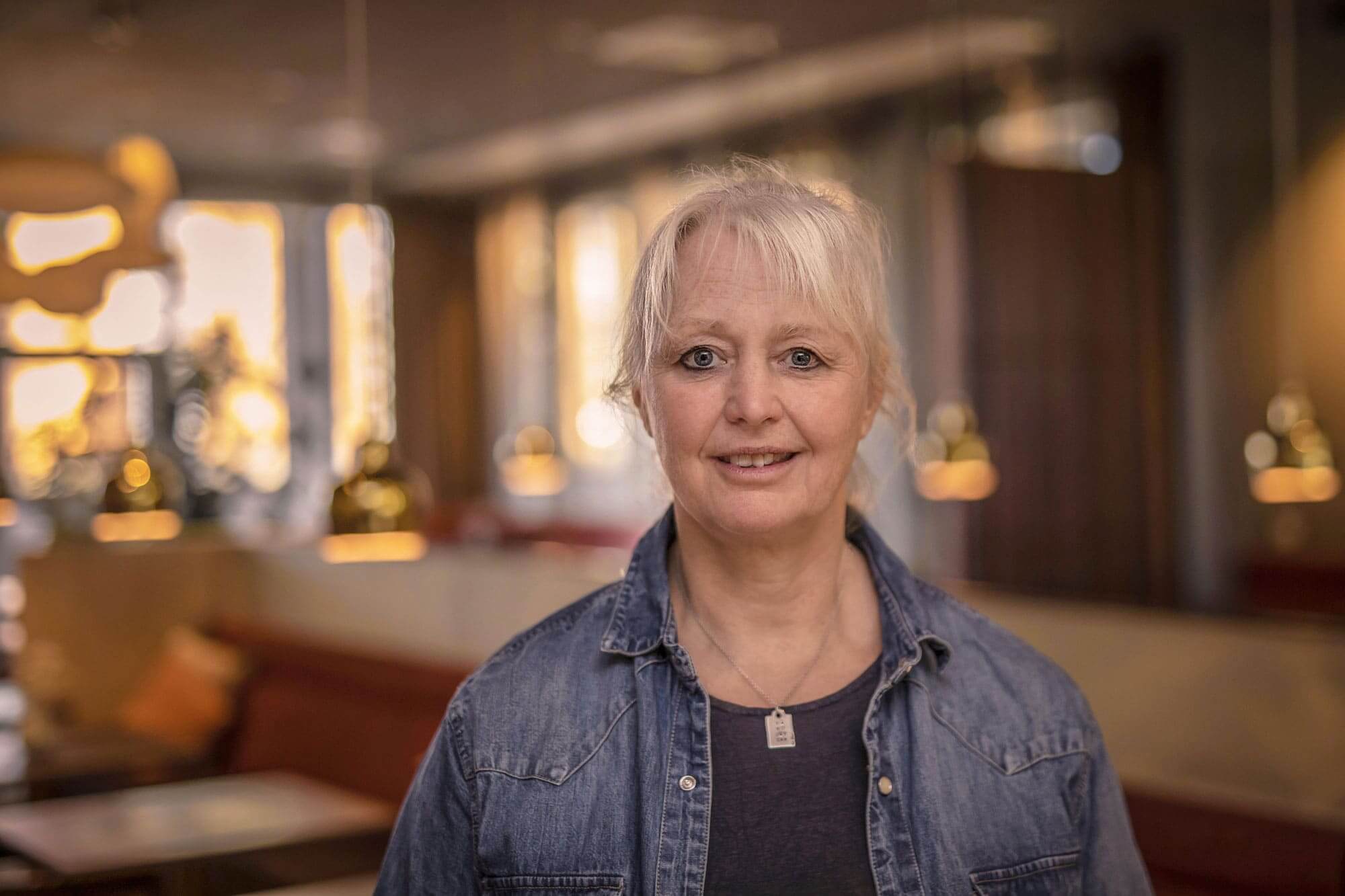
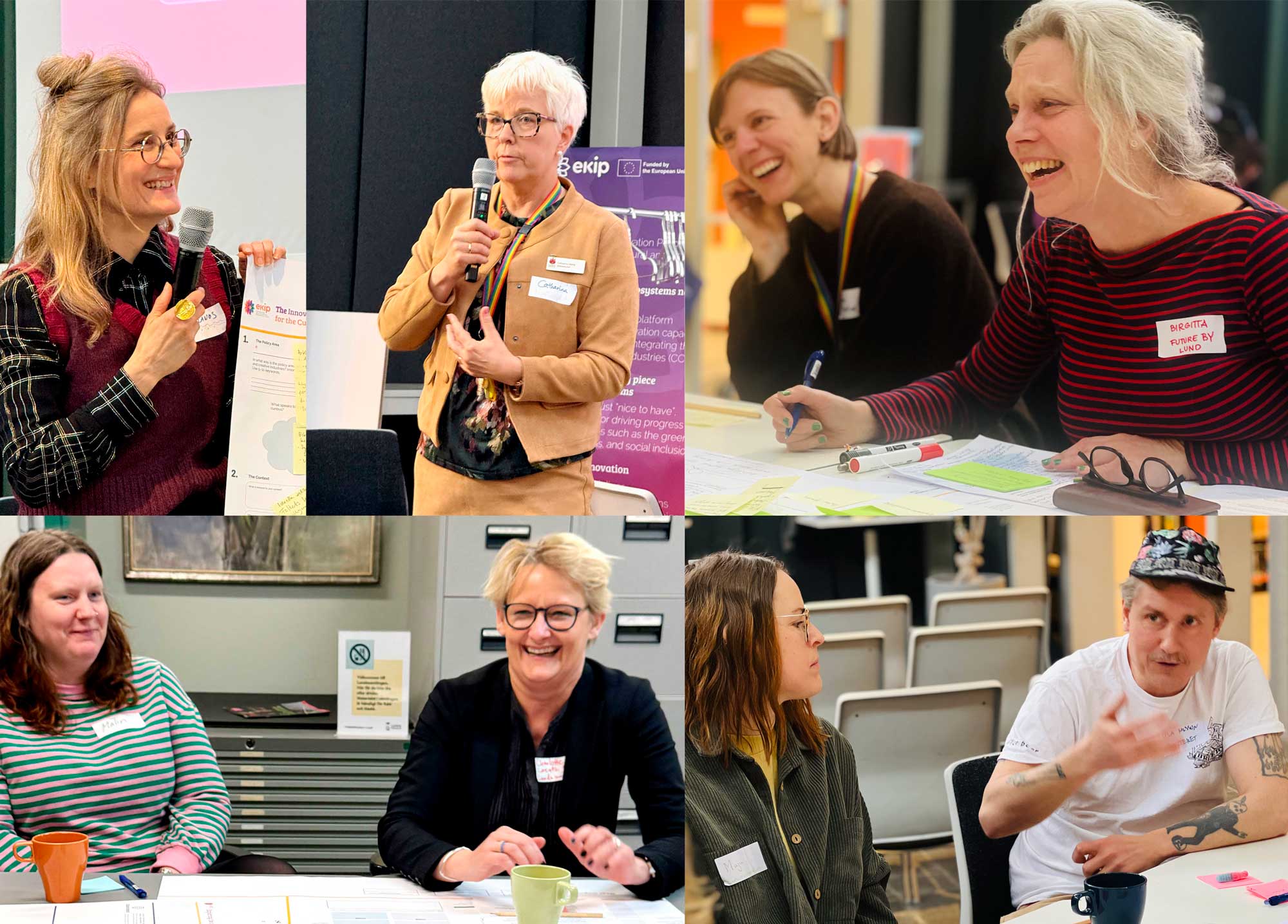
The workshop is based on the method for innovating complex societal challenges developed by Future by Lund, Lund University and EIP. The participants were piloted through a group process in which, after an initial analysis, they created an innovation portfolio that gives meaning and relevance to both their own activities and the issue. The workshop was led by Future by Lund's Katarina Scott and Birgitta Persson, Library Director Catharina Isberg and Daniella Melin and Beatrice Alfsson Kristensson (Lund Libraries). In addition, an introduction was given by Dr. Vikky Jones, a researcher at University of Edinburgh and a part of the research team around Ekip.
The digital world of libraries is not only about citizens struggling to fill out a form, but also to show that digital tools also provide an opportunity to make life more practical, fun and joyful. The thoughts of the groups were very much how to create and develop a playing field, an ecosystem, to lift the digital needs of the inhabitants and to put this work as a portfolio in which many actors can collaborate.
- We want to change the role of libraries; from the player who largely gets to manage the pages of digitisation to instead working proactively together with other actors. The library could be a test bed for problem solving in digital inclusion,” says Birgitta Persson.
Libraries and some stakeholders already have collaborations that could be developed, but it would also involve finding new partners. An exciting task could be to work more with those who create the digital solutions to make the work of library staff and the lives of citizens easier.
- Those who work in the library meet citizens when they need help with their various IT apps or similar, and they thus become specialists in what is not working. We can invite those who develop digital solutions to initially test and develop the functions together with the libraries so that they can be helped to make a better system,” continues Birgitta Persson.
More thoughts from the workshop
"We can work with innovation so that we include people who live in Lund to be involved in developing the tools that the companies around us use so that people can also work with better interaction and solutions."
"We need local innovation and can make a map of what we are doing locally, but also start testing it together."
"We can model how libraries work with their program activities, by inviting other actors in society to use the library as an innovation hub."
"By building an ecosystem, libraries can focus on their core tasks and even be more visionary of the future, rather than just managing a lot of things in a reactive way."
"The ecosystem needs sub-areas such as missions, clear responsibilities and boundaries for who does what, as well as ecosystem building. We also need meeting arenas and knowledge as sub-areas, dialogue about cooperation and a solution to the form, how to collaborate."
"Let's co-create something here so that we can be a resource for other players the next time they launch their services. The libraries see the consequences of when it doesn't work and know what difficulties people have. In this way, libraries become a place of knowledge for the various actors. If we can systematize it and at the same time have the civic focus on this, libraries can be a resource in this type of development."
"Many of the questions that come into the library linked to digital challenges can be delegated to other actors in the ecosystem."
"It needs to be clear to all actors who is doing what. We also want to build the tasks into our institutions, not into personal relationships."
"It needs to be more obvious to residents what they can get help with and what they can't get help with. Loneliness between people decreases if more people are included in society."
"There are a lot of volunteers in the cities that we don't use. This civil society is very helpful and we need to start working with them."
"We need to be involved in making sure that not only the physical space, but also the digital space, is a safe place for people."
"We can make the library a safe place where people can come and become more digital. There you can learn new things, but also get help with things that may be very abstract and that you don't dare to do alone at home."
"New types of financing will be needed."
Facts
The AI Commission proposes “an investment in public libraries of SEK 100 million per year in the years 2025-2029. It strengthens their mission to promote the use of information technology for knowledge acquisition and learning. The initiative aims to help the public try out and use AI tools free of charge”. Source: AI Commission Roadmap for Sweden, SOU 2025:12
At both EU and national level, digital sovereignty is a high priority. Digital sovereignty is about having control over the digital systems and services on which we depend. It concerns both how data is processed, what technical solutions we use and digital infrastructures such as cloud solutions and servers. The EU is investing both in regulation through the Digital Markets Act (DMA), the Digital Services Act (DSA) and the Artificial Intelligence Act (AI Act), but also in stimulating European entrepreneurship and innovation to develop its own solutions that reduce dependence on the United States and China in particular.
ekip has chosen to investigate the “digital commons” in relation to cultural and creative industries as an important complement to building digital sovereignty and democratic participation. Digital commons is about “collectively managed digital resources governed by communities (...) prioritising open access, transparency, and collective governance over private profit”.
Source: ekip.