
Common solutions can provide more equitable compensation
Within Kalaudioscope portfolio the actors invest in jointly developed knowledge for new solutions about immersive experiences in sound and video with the vision to develop opportunities for the audience to experience the live concert digitally. The actors are experts from different fields and the portfolio works with many parts — of course audio and video but also AI, cloud solutions, legal aspects and user experience.
The Koncert X Project examines the legal aspects of the experiences for which the Kalaudiscope innovation portfolio works to realize solutions. In the idea there are thoughts that each one becomes their own conductor or producer, that opportunities for interaction are created and even that opportunities for training in artistic areas are given. It could also be to provide a new kind of access to cultural events for those unable to make a physical visit and to provide the opportunity to share these personally-shaped concerts.
The new technological possibilities can be seen as democratization, new ways of engaging the audience, a new creative potential and new experiences, but it also creates new business perspectives and new types of business models. The business models chosen can in different ways benefit different actors, including artists, companies and society, and thus law needs to be part of the work.
- The technical and creative possibilities are endless and in the future we can expect that different actors will use these types of technologies and implement something new, says Ana Nordberg at the Faculty of Law at Lund University. From a legal perspective, we can start theorizing and start thinking about this before the technology is out there. The reason is that it is important to think about these issues from the perspectives of different actors and not let companies design and implement something that suits them and then everyone else - artists, institutions and the public - has to adapt.
- It has been important to have the legal experts involved in the innovation work in the portfolio, not just as expertise on the sidelines, says Birgitta Persson from Future by Lund. It has allowed for a broader and more open conversation that focuses more on opportunities than limitations.
There are many legal issues to analyze, but the project focuses on what is seen as the most relevant. Here are Koncert X's preliminary observations of what's important to look at early in the innovation process:
*Responsible innovation to protect integrity.
*How is licensing supposed to work? It's a complex landscape of copyright and related rights.
*Where is the dividing line between enhanced streaming and co-created streaming? There will be new forms of exploitation of works when the audience becomes a co-author.
*AI training at live concerts and performances is a legal grey area. There is currently no clarity on how to use other people's works.
*Fair renumerating. A concert is a very IP heavy situation and there are many who should be part of the compensation.
*Datafication of immersive concerts opens powerful opportunities for personalization, new revenue, and artistic innovation, but also raises urgent questions of privacy, ownership, and cultural integrity.
To investigate what the ecosystem thinks about the new technological possibilities, Konsert X organized three workshops with educators, artists, musicians and producers. In addition, a roleplay with cards were designed based on the feedback from the workshops.
- Our method was simple. We asked people to identify their best and worst case scenarios regarding this technology, what they see as obstacles and what drivers and solutions they see,” says Aurelija Lukoševičienė from the Faculty of Law at Lund University. They also found their own solutions and new combinations. We got interesting feedback.
Although the innovation has a high legal complexity and the solutions are not yet complete, it still is possible to think of different solutions. One possibility is to limit spectators' possibilities so that they only have access to streaming and not provide opportunities for personalization. For many players, it is also about what the compensation will be.
- It was one of the main points of the feedback, that compensation should be fair, continues Aurelija Lukoševičienė. There are examples from the past, particularly in the music industry, where actors feel that platforms do not provide fair compensation to creative participants in ecosystems. A fair portion of the cake makes the solution more conceivable to many. And in terms of privacy, it may be possible to draw limits on which participants you can zoom in on or make sure that there are technical possibilities to exclude certain artists altogether.
What is reported in this article is only a very small part of the results of Koncert X. We refer to the upcoming report, which will be made available, among other things, through our website.
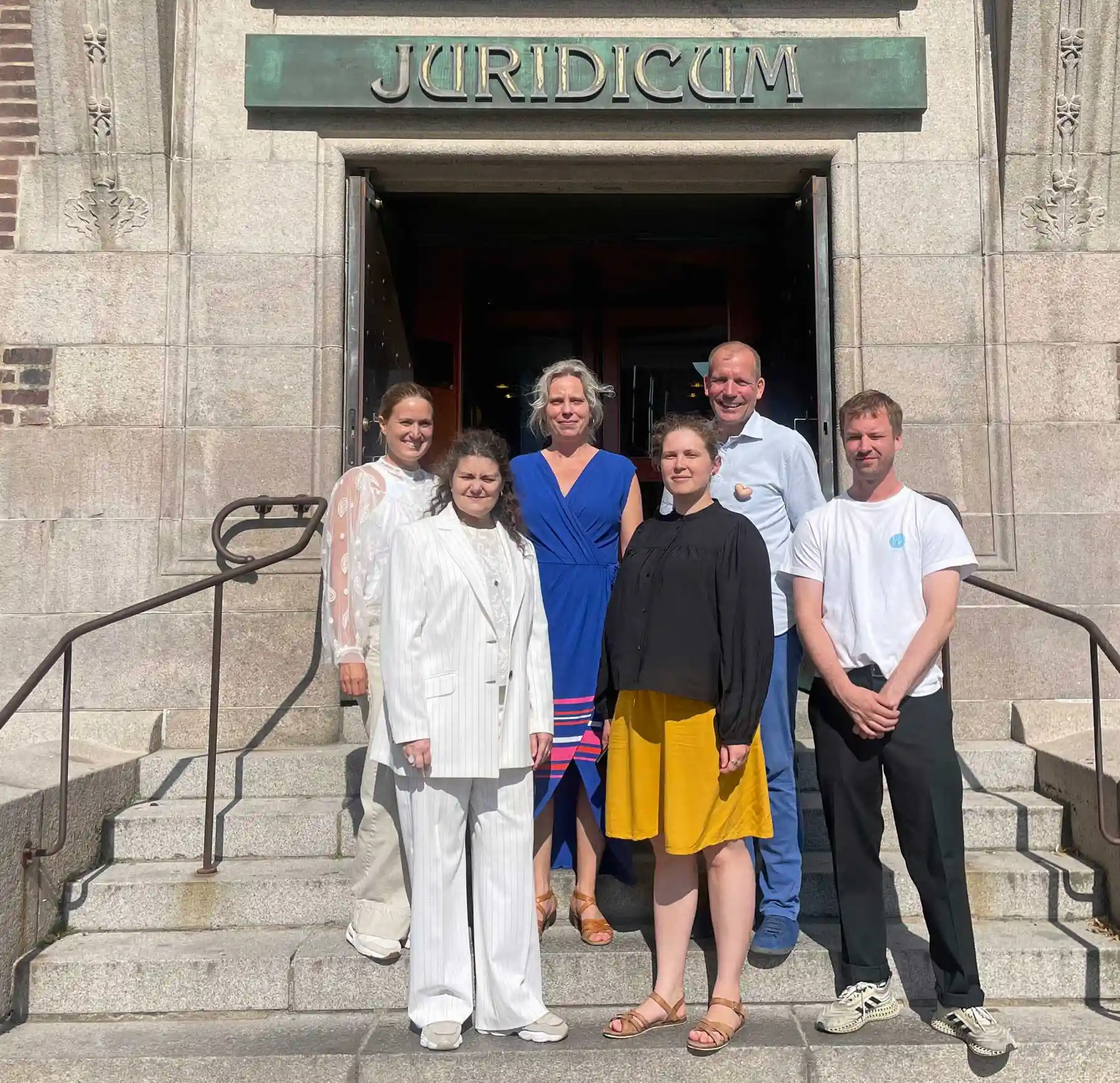
Koncert X is a one-year project funded by Vinnova. Project partners are the Faculty of Law and the Faculty of Arts at Lund University and Future by Lund. The project deals with the legal aspect of Kalaudioscope projects and is part of the Kalaudioscope - Personalised Digital Live Experiences portfolio.
